For most Central Florida single-family rentals, yes — with a written pet policy. About two-thirds of U.S. households own a pet, pet-friendly homes draw a larger applicant pool and keep tenants longer, and Florida lets you charge a refundable pet deposit, a non-refundable pet fee, and monthly pet rent to offset the extra risk.
The Case for Saying Yes
Pet owners are no longer a niche. Roughly 94 million U.S. households — about two-thirds — own at least one pet, and renters with pets consistently report that housing is the hardest part of ownership: 72 percent say they struggle to find pet-friendly housing, and only 8 percent of rental properties are free of restrictive pet policies. Meanwhile, about 80 percent of apartments listed for rent now accept at least one pet, so a “no pets” single-family home is competing against a market that has largely moved on.
The payoff for owners shows up in turnover. Industry research on pet-inclusive housing finds that residents with pets stay up to 21 percent longer, which means fewer vacancies, fewer make-readies, and fewer placement fees over the life of the property. A wider applicant pool also lets a manager be pickier on the things that actually predict a good tenancy — income, rental history, and credit — instead of filling the home with whoever is left after excluding pet owners.
Pet Deposit vs. Pet Fee vs. Pet Rent
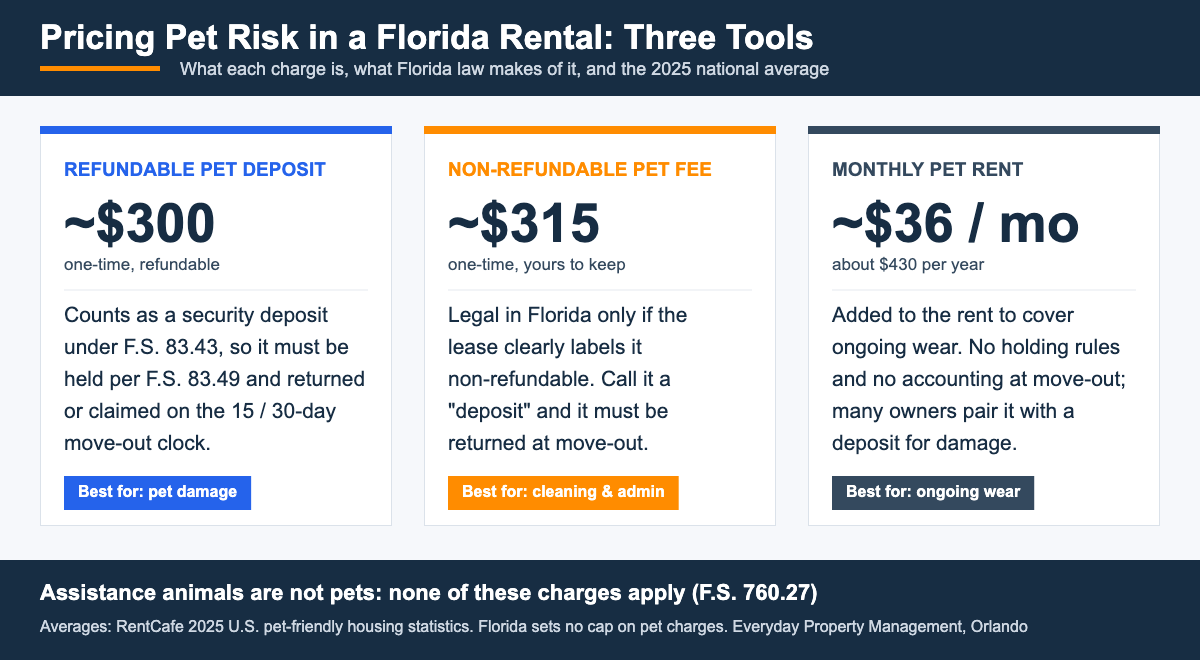
Florida sets no cap on what you charge for pets, but the label you use matters. A pet deposit is refundable, which makes it a security deposit under Florida Statute 83.43 — so it has to be held in a separate Florida account under Statute 83.49 and returned or claimed on the same 15-day and 30-day move-out clock as the main deposit (see how security deposits work in a managed property). A pet fee is a one-time charge you keep, but only if the lease clearly says it is non-refundable; call it a deposit and it becomes refundable. Pet rent is a monthly add-on that simply raises the rent. Nationally in 2025, the averages were about $300 for a pet deposit, $315 for a pet fee, and $36 a month in pet rent. Many landlords combine a deposit for damage with pet rent for ongoing wear.
What a Good Pet Policy Covers
A pet policy belongs in a signed lease addendum, not a text message. It should state how many pets are allowed and of what size, whether any breeds are excluded, and require current rabies vaccination and county licensing. Breed and weight limits are common — about 80 percent of pet-friendly properties restrict breeds and 64 percent cap weight — but check your landlord insurance first, because many policies exclude specific breeds and a lease cannot override that. Ask for a photo and vet records with the application, and note the pet on the move-in inspection so damage is easy to attribute later.
Assistance Animals Are Not Pets — and the Rules Just Changed
A service animal or emotional support animal is a reasonable accommodation, not a pet, so pet deposits, fees, and pet rent cannot be charged for one. Florida’s Statute 760.27 lets you ask for reliable documentation from a health care practitioner with personal knowledge of the tenant’s disability, treats an internet certificate alone as insufficient, allows proof of licensing and vaccination, and makes the tenant liable for any damage the animal causes. You may not require a specific form or ask about the diagnosis.
One caution for 2026: on May 22, 2026, HUD rescinded its 2020 assistance-animal guidance and now pursues federal complaints only for animals individually trained for a disability-related task. That changes federal enforcement, not the Fair Housing Act itself, private lawsuits, or Florida’s statute — so handle every request case by case, in writing, and with legal advice when in doubt.
Pets in Orlando and Central Florida Rentals
Single-family homes with fenced yards in Orange, Seminole, and Volusia counties attract pet owners more than any other rental type, which is exactly where a clear pet policy pays off. Many Central Florida neighborhoods are HOA-governed, and the HOA’s pet rules bind your tenant too — a lease cannot allow what the association bans, so read the covenants before you advertise “pets welcome.” If you are comparing property management companies near me, ask how each one screens pets, what the addendum says, and who inspects for pet damage. At Everyday Property Management, pet screening and a pet addendum are part of full management at 8 percent of monthly rent, tenant placement is half a month’s rent with a 12-month tenant guarantee, and lease renewals are free.
Related Questions
- How do security deposits work in a managed property?
- How do property managers screen tenants?
- How often should a rental property be inspected?
- Who pays for repairs in a managed rental property?
- Central Florida property management services
Thinking About Opening Your Rental to Pets?
Tell us about the property and we will map out a pet policy — deposit, fee, or pet rent, plus the addendum language — at no charge and no obligation. Call (407) 907-2933 or use the form below.
General information for Florida rental owners, not legal advice. Statute references are to the 2025 Florida Statutes; the HUD policy change is as of May 22, 2026. For a specific lease or accommodation request, speak with a Florida landlord–tenant attorney.