What Florida Law Puts on the Owner
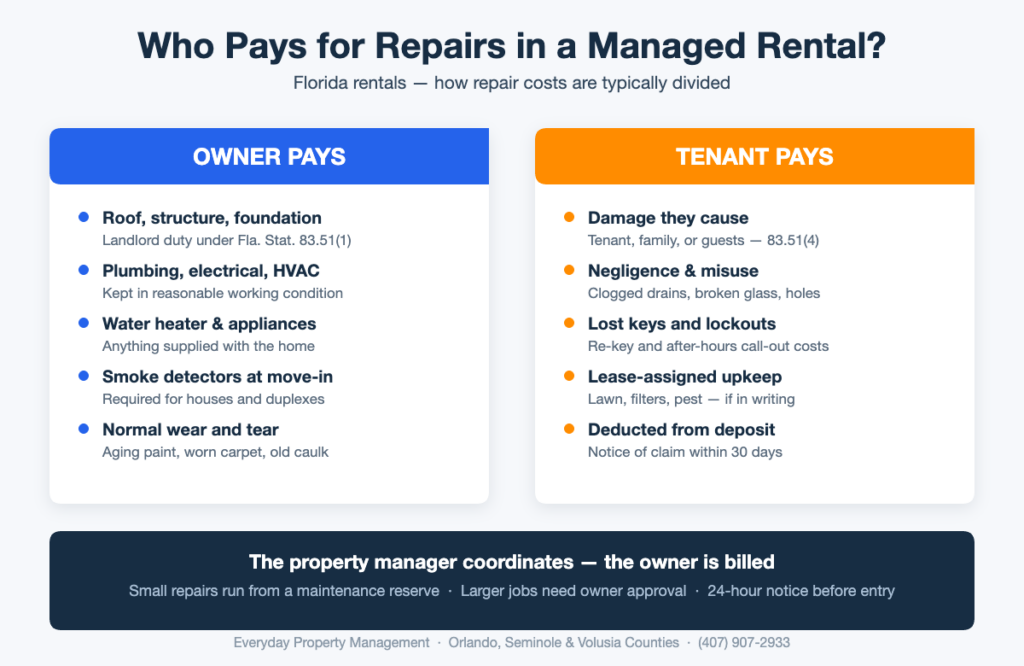
Under section 83.51 of the Florida Statutes, the landlord — meaning the owner, not the management company — must comply with applicable building, housing, and health codes for the entire tenancy. Where no code applies, the owner must keep roofs, windows, doors, floors, steps, porches, exterior walls, foundations, and other structural components in good repair, and the plumbing in reasonable working condition. A single-family home or duplex must also have working smoke detectors installed at the start of the tenancy. Anything supplied with the home follows the same rule: the water heater, the air conditioner, the refrigerator that came with it. If the owner provided it, the owner keeps it working.
The shorthand: the owner pays for the house and everything in it that wears out. Repainting between tenants, carpet at the end of its life, an air handler that fails after eight Florida summers — that is the cost of owning a rental, not a tenant charge.
What the Tenant Pays For
Florida law draws the line at fault. Section 83.51(4) says the landlord is not responsible for conditions created or caused by the negligent or wrongful act of the tenant, a member of the tenant’s family, or anyone else on the property with the tenant’s consent. In practice that covers a cracked window, a drain clogged with wipes, a jammed disposal, a door damaged during a move, or a 10 p.m. lockout. Those charges are billed during the tenancy or deducted from the security deposit at move-out — and the deposit rules are strict. If the owner intends to keep any part of the deposit, written notice of the claim must go out within 30 days of the tenancy ending; if there is no claim, the full deposit is due back within 15 days. The tenant then has 15 days to object in writing.
A lease can also assign routine upkeep to the tenant — lawn care, air-filter changes, pest control. For a single-family home or duplex, Florida allows several obligations that are mandatory in apartment buildings — extermination, garbage removal, locks and keys, heat and hot water — to be shifted by written agreement. Most managed Central Florida rentals are exactly that kind of property, so the lease wording does real work here.
Where the Property Manager Fits — and Where the Money Comes From
The management company does not pay for repairs out of its own pocket. What it does is take the call, judge whether the problem is an emergency, dispatch a licensed and insured vendor, confirm the work, and pay the invoice from the owner’s funds. Two mechanics make that possible. The first is a maintenance reserve — a small balance held back from rent, commonly $200 to $500, so a plumber can be dispatched the same day. The second is an approval threshold in the management agreement: repairs under an agreed dollar figure are handled without a phone call; anything above it needs the owner’s sign-off, except in a true emergency where waiting would cause more damage or leave the home unsafe. Ask any manager you interview what that threshold is and whether they mark up vendor invoices.
Access matters too: a manager cannot simply let themselves in. Florida requires at least 24 hours’ notice to the tenant before entering for a repair, between 7:30 a.m. and 8:00 p.m.
Repair Costs on Orlando, Seminole & Volusia County Rentals
Central Florida is hard on rental homes in ways that show up on the repair ledger. Air conditioning runs nine months of the year, which makes HVAC the biggest recurring line item on most Orlando rentals — and an outage in July is an emergency, not a work order for next week. Storm season produces roof leaks, and older Seminole and Volusia County homes with original cast-iron or polybutylene plumbing fail on their own schedule. Owners who budget for those realities, and who let a manager catch small problems at a routine inspection, spend far less across a five-year hold than owners who wait for the tenant to call.
Response speed protects you legally, too. If a tenant gives written notice of a material repair failure and it goes unaddressed for seven days, Florida law lets them terminate the lease and, in some circumstances, withhold rent through the court. Fast, documented repair handling is how an owner stays out of that situation entirely. At Everyday Property Management, maintenance coordination runs 24/7 through licensed, insured Central Florida vendors, every job is logged in the owner portal with photos and a cost breakdown, and we charge no maintenance markup fees. Full management is 8% of monthly rent. If you have been searching for rental property repair service near me, what you actually need is a manager who already has those vendors on speed dial.
Related Questions
- How much does a property management company charge?
- What does a property manager actually do?
- Is hiring a property manager worth it for a single rental?
- How do property managers screen tenants?
- How our maintenance & repairs service works
- What is a reasonable maintenance reserve for a rental?
- How often should a rental property be inspected?
- What records should a landlord keep for taxes?
Stop Guessing What a Repair Will Cost You
We coordinate every repair on your rental — 24/7 emergency response, licensed vendors, no maintenance markup, and a documented record of every dollar. Full management is 8% of monthly rent, tenant placement is half a month’s rent backed by a 12-month tenant guarantee, and lease renewals are free. Call (407) 907-2933 or send us the details below.