A manager takes the call around the clock, decides within minutes whether it is a true emergency, dispatches a vetted vendor, and authorizes the work up to a spending limit already agreed with you. Florida law lets a landlord enter without advance notice when it is genuinely an emergency.
What actually counts as an emergency
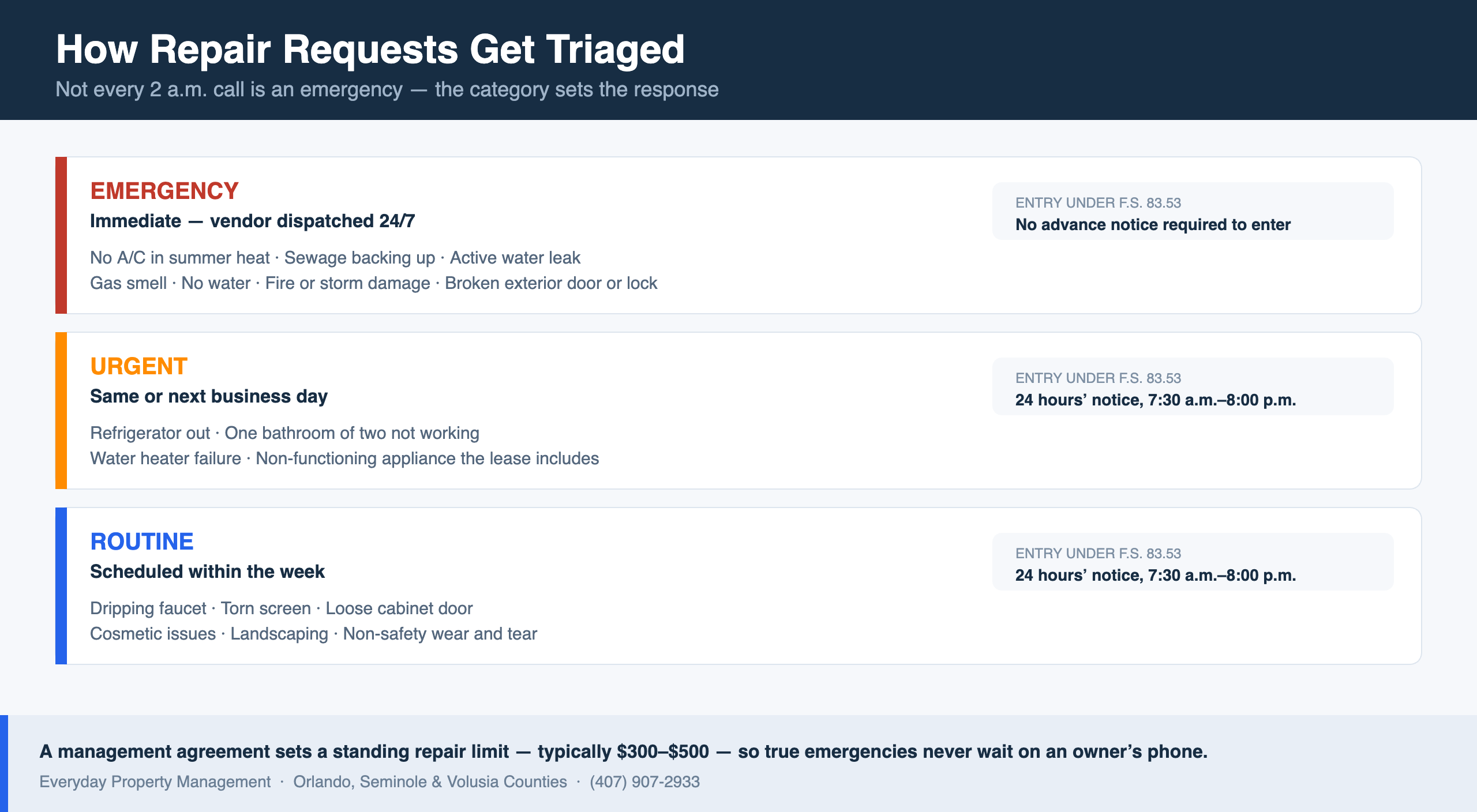
An emergency is anything that threatens safety, health, or the building itself if it waits until morning. In practice that means: no air conditioning during Florida’s hot months, no running water, sewage backing up, an active water leak, a gas smell, fire or storm damage, no working exterior lock, or an electrical fault.
What is not an emergency, however loudly it is reported: a dripping faucet, one broken appliance the tenant can work around, a torn screen, or anything cosmetic. Those get scheduled. The distinction matters because emergency dispatch costs a premium, and a manager who treats every call as urgent is spending your money badly.
The spending limit is the whole trick
Your management agreement sets a standing repair authorization — commonly $300 to $500 — that the manager can spend without calling you first. Below that line, the work simply happens. Above it, you get a call with the diagnosis and a quote before anything is committed.
That single clause is what separates a managed property from a self-managed one at 2 a.m. Without it, a burst supply line waits for you to wake up and answer the phone. Set the number deliberately: too low and you will be woken for a $200 water heater part, too high and you lose visibility over real spending.
Entry rules — and the one time they do not apply
For ordinary repairs, Florida Statute 83.53 requires at least 24 hours’ notice before entering, and entry has to fall between 7:30 a.m. and 8:00 p.m. That notice period was raised from 12 hours by Miya’s Law in 2022, and it is a common place for self-managing owners to slip up.
In a genuine emergency, none of that applies — a landlord may enter at any time to protect or preserve the premises. The exception is real, but it is narrow. “I wanted to check on something” is not an emergency, and treating it as one is how a routine visit becomes a legal problem.
What the tenant has to do
Tenants are expected to report problems promptly. A small leak reported the same day is a plumber’s visit; the same leak reported three weeks later is a subfloor and drywall job, and the delay itself can shift responsibility for the extra damage. Good managers make reporting frictionless — a portal, a phone line, a photo — precisely because friction is expensive.
Under Florida Statute 83.51 the landlord carries the repair obligation for structural elements, plumbing, and anything required by housing codes. A tenant who believes that duty is unmet can serve written notice and, after seven days, pursue remedies — another reason speed is cheaper than delay.
Why the stakes are higher in Central Florida
Two local realities drive most emergency calls here. Air conditioning is not a comfort item in Orlando, Seminole County or Volusia County between May and October — an indoor temperature climbing through the 90s is a habitability issue, and it is the single most common after-hours call we take.
The second is hurricane season. From June through November a single storm generates roof leaks, water intrusion and downed trees across an entire portfolio at once, at exactly the moment every vendor in the region is booked. Standing relationships with contractors are what decide whether your property is repaired in days or in weeks.
Related Questions
- Who pays for repairs in a managed rental property?
- What is a reasonable maintenance reserve for a rental?
- How often should a rental property be inspected?
- What does a property manager actually do?
- Rental Maintenance & Repairs in Florida
Talk to a Local Property Manager
Everyday Property Management answers maintenance calls around the clock for Orlando, Seminole County and Volusia County owners, with vetted vendors and a repair limit you set. Call (407) 907-2933 or send us a message below.
This page is general information, not legal advice. Talk to a Florida attorney about your situation.