Keep every document that proves rental income, deductible expenses, and your property’s cost basis: leases, rent ledgers, bank statements, receipts and invoices, mortgage and insurance statements, closing documents, and improvement records. The IRS expects most of these for at least three years after filing — but basis records must be kept until you sell.
The four categories that matter
Nearly every rental record falls into one of four buckets.
Income. Signed leases, rent ledgers, late fees, forfeited deposits, and the bank or owner statements showing what actually landed in your account.
Operating expenses. Repair invoices, management fees, HOA dues, insurance, property taxes, utilities, advertising, legal and accounting fees, and mileage logs.
Cost basis. Your purchase closing disclosure plus every capital improvement — roof, HVAC, kitchen. These depreciate over 27.5 years instead of being deducted all at once, and they cut your taxable gain at sale.
Ownership. Deeds, mortgage statements, LLC documents, and any 1099s issued to or received by you.
How long you have to keep them
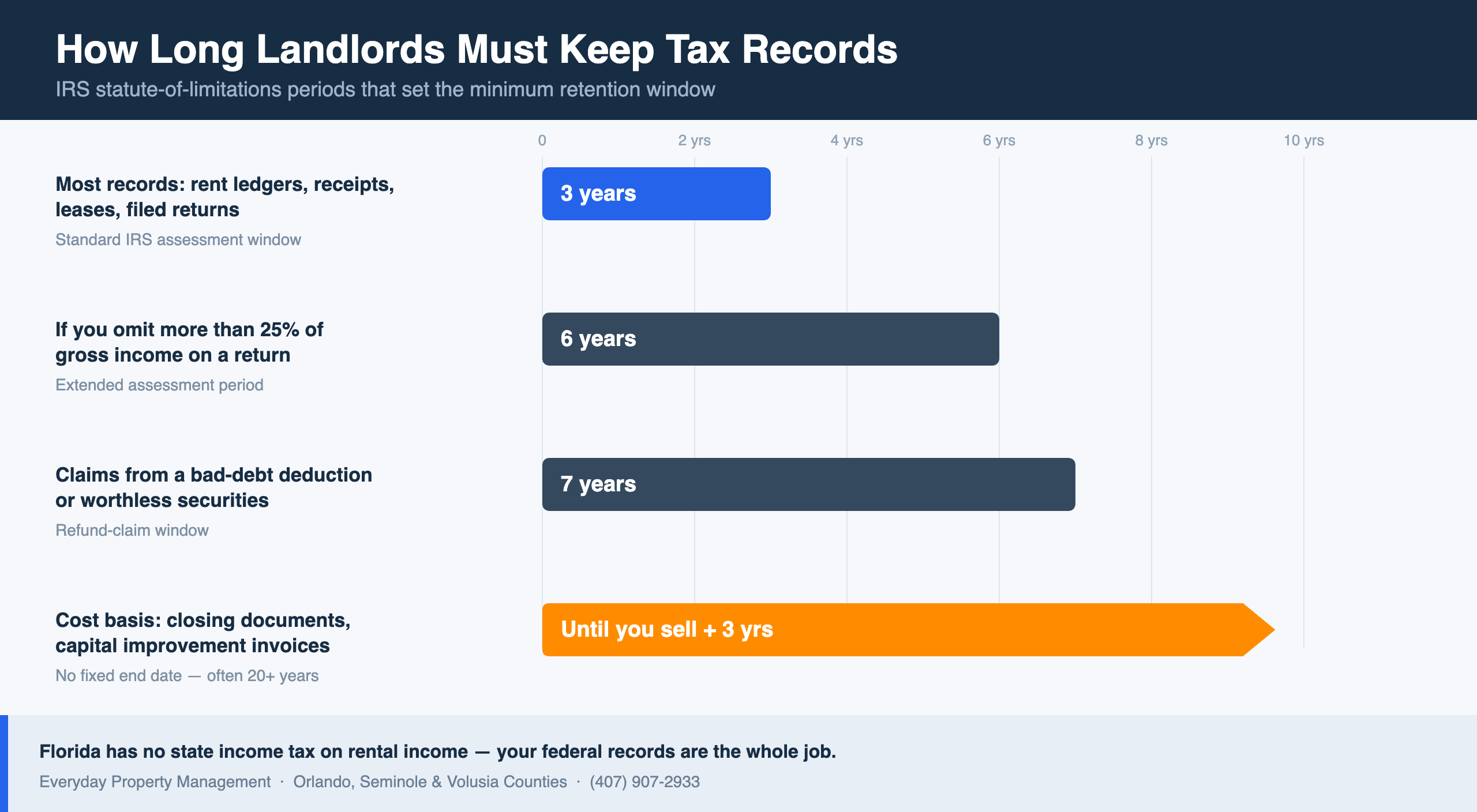
Three years is the floor, not the rule. The IRS can generally assess additional tax for three years after you file. That stretches to six years if you omit more than 25% of your gross income, and seven years for claims tied to a bad debt or worthless securities. File nothing, or file fraudulently, and there is no limit at all.
Basis records are the exception landlords get wrong. Purchase and improvement documents have to survive until the limitations period closes for the year you sell — so a 2010 receipt can still matter in 2035. Scan them, back them up, and keep them out of the annual purge.
The receipts landlords lose most often
Small purchases. The de minimis safe harbor lets you deduct items costing up to $2,500 per invoice in the year you buy them rather than depreciating them — but only with an accounting policy in place before the tax year starts, and only if you keep the invoice.
Contractor payments. The 1099-NEC filing threshold rose from $600 to $2,000 for payments made in 2026, and is indexed to inflation from 2027. Fewer forms is not fewer records: you still need each vendor’s W-9 and proof of what you paid.
Hours worked. Claiming the qualified business income deduction under the rental safe harbor requires contemporaneous time logs, not an April reconstruction.
What a property manager hands you
Professionally managed owners get most of this pre-organized. Everyday Property Management sends monthly statements itemizing rent collected, the 8% management fee, and every maintenance charge, plus a year-end summary and a 1099-MISC for gross rents. Vendor invoices ride along with the work order, so each repair is documented as it happens.
You still hold the rest: mortgage interest, insurance, tax bills, improvements you paid for directly, and your purchase closing documents.
What Florida landlords file on top
Florida has no state personal income tax, so your federal file is the whole job. Three state-level items still generate paperwork.
Furnished rentals in Orange, Seminole, and Volusia counties may owe tangible personal property tax on furniture and appliances. The DR-405 return goes to your county property appraiser by April 1, and filing on time is what secures the $25,000 exemption.
Short stays cross a bright line: leases of six months or less carry 6% state sales tax plus county tourist development tax. A lease must run six months and a day to fall outside it.
Keep deposit paperwork separate. Florida Statute § 83.49 requires deposits held in a separate account and written notice within 30 days of any claim against one — records that prove when a deposit became taxable income to you.
Related Questions
- How do security deposits work in a managed property?
- How does rent collection work with a property manager?
- What is a reasonable maintenance reserve for a rental?
- Who pays for repairs in a managed rental property?
- Property Management Pricing in Central Florida
- Do I need an LLC for my rental property?
- Monthly owner statements and year-end 1099s
Talk to a Local Property Manager
Clean records start with clean reporting. Everyday Property Management gives Orlando, Seminole County, and Volusia County owners itemized monthly statements and a year-end package their accountant can work from directly. Call (407) 907-2933 or send us a message below.
This page is general information, not tax advice. Talk to a CPA about your situation.