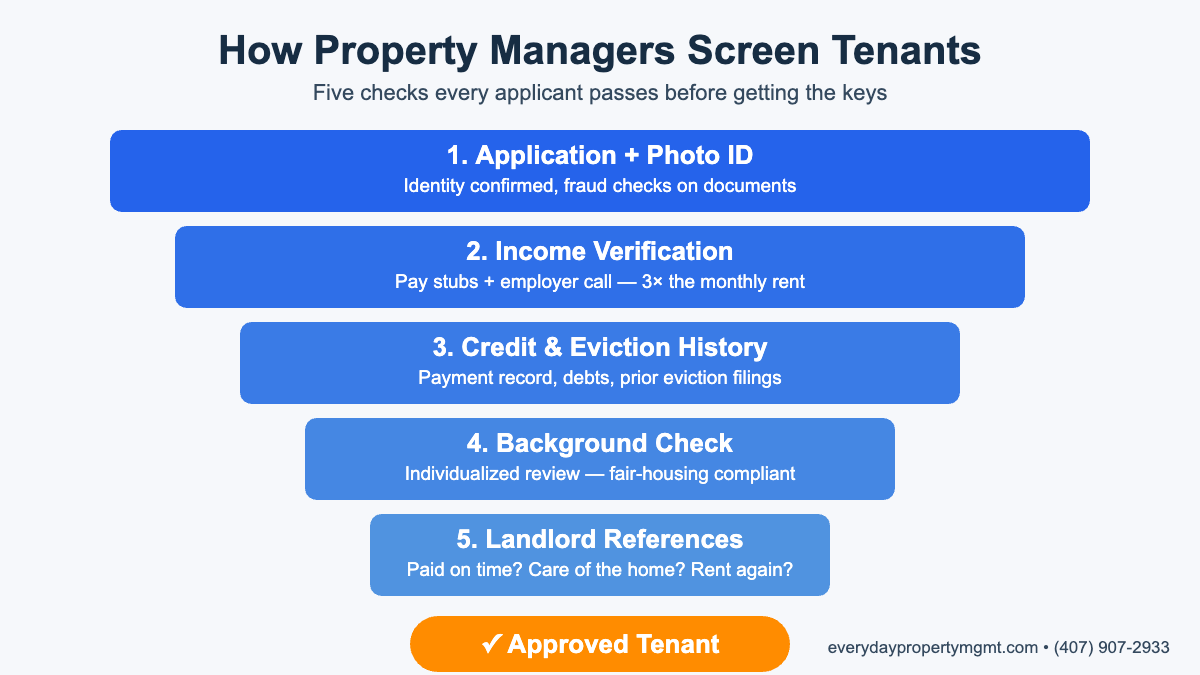
The Screening Process, Step by Step
Good screening starts before the first application arrives: a professional manager publishes written rental criteria — minimum income, credit standards, eviction and background policies — and applies them identically to every adult applicant. That consistency is both the legal backbone of fair screening and the practical reason it works.
From there, each application moves through the same funnel. Identity first: a government photo ID is matched to the application, and documents are checked for signs of tampering. Income second: most managers require gross income of about three times the monthly rent, verified with recent pay stubs or bank statements and a direct call to the employer — never just the paperwork the applicant hands over. Credit and eviction history third: the credit report is read for payment patterns, collections, and rent-related debts (not just the score), and a nationwide eviction search flags prior filings. Background check fourth, run within fair-housing rules. References last: previous landlords are asked the three questions that matter — did they pay on time, how did they leave the property, and would you rent to them again?
The Legal Rules Behind Every Application
Screening is one of the most regulated things a landlord does. Under the federal Fair Credit Reporting Act, an applicant must give written permission before a credit or background report is pulled, and if the application is denied — or approved only with a co-signer or higher deposit — based even partly on that report, the applicant must receive an adverse-action notice naming the screening agency and explaining the right to a free copy of the report and to dispute errors. The Fair Housing Act prohibits screening decisions based on race, color, religion, sex, national origin, disability, or familial status, and HUD guidance warns that blanket bans on anyone with a criminal record — or denials based on arrests that never led to conviction — can create fair-housing liability. Professional managers use individualized review instead: the nature and age of an offense, and evidence of good rental history since. In Florida, there is no statutory cap on application fees, but they should be disclosed up front and reflect the real cost of screening.
Where Self-Screening Landlords Get Burned
Application fraud is the quiet risk. Convincing fake pay stubs and edited bank statements can be bought online for a few dollars, and a practiced bad tenant knows exactly which corners a busy landlord will cut. The defense is verification at the source: calling the employer’s main line rather than the number on the application, using bank-linked income verification instead of PDFs, and cross-checking the applicant’s story against the credit file. A landlord who skips those steps isn’t saving time — they’re deferring the cost to an eviction later.
Tenant Screening in Orlando, Seminole & Volusia Counties
Central Florida’s rental market moves fast, which tempts owners to take the first application with a deposit attached. Local screening has one advantage worth using: eviction case records for Orange, Seminole, and Volusia counties are public through each county clerk of court, so a local manager can see filings that a national database may lag on. At Everyday Property Management, screening is where our incentives line up with yours — our half-month tenant placement fee is backed by a 12-month tenant guarantee, so if a tenant we place leaves early, we re-lease the home at no charge. We only make that promise because our screening is strict. If you’ve been searching for tenant screening near me, this is the process behind the phrase — and we run it on every single application.
Related Questions
- How much does a property management company charge?
- What does a property manager actually do?
- Is hiring a property manager worth it for a single rental?
- How our tenant screening and placement service works
- What happens when a tenant stops paying rent?
- How do security deposits work in a managed property?
- Should I allow pets in my rental property?
- Tenant background and credit screening in Central Florida
Get a Professionally Screened Tenant — Guaranteed
Every tenant we place is screened with the full process above and backed by our 12-month tenant guarantee. Tenant placement is a one-time half-month’s rent, and full management is 8% per month with free lease renewals. Call (407) 907-2933 or send us a note below.