Finding and Placing the Right Tenant
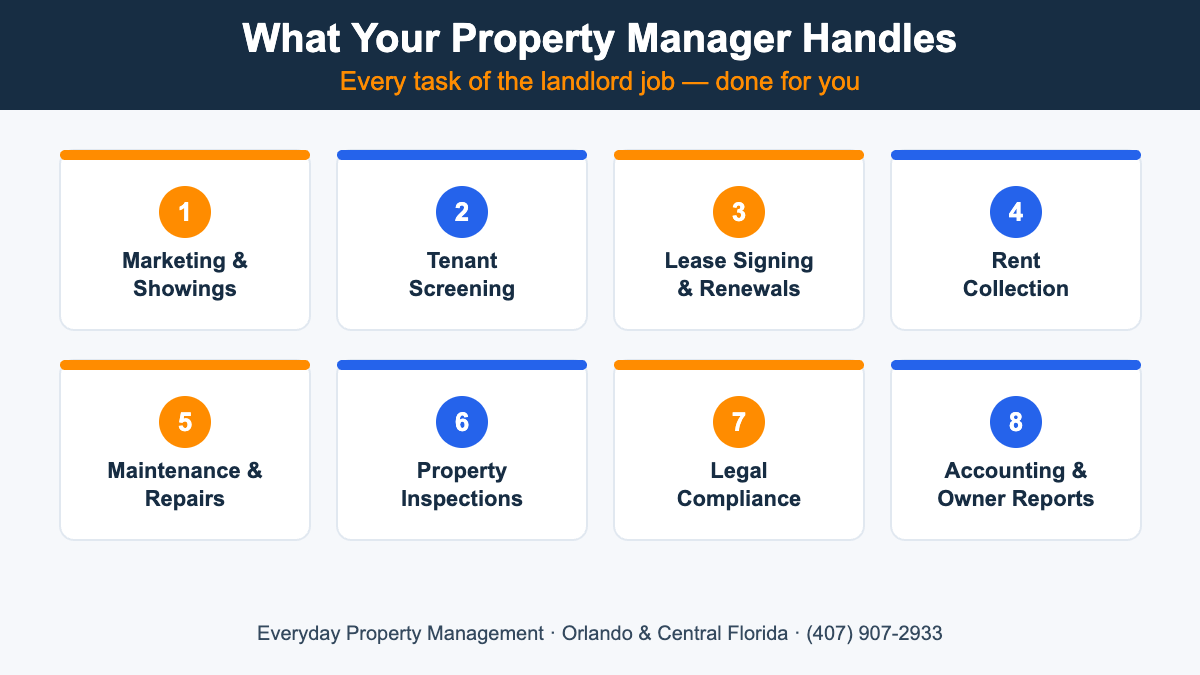
The job starts before there is a tenant. A property manager prices the home against the local rental market, photographs and lists it, advertises across the major rental platforms, answers inquiries, and runs showings. When applications come in, the manager screens each applicant — credit, income verification, rental history, and background — then prepares and signs a legally sound lease on your behalf.
In Florida, this leasing work is regulated: under Chapter 475 of the Florida Statutes, anyone who rents property, negotiates leases, or collects compensation for leasing services for others must operate under a licensed real estate broker. A legitimate management company is licensed; a handyman who “also finds tenants” for a fee generally is not allowed to.
The Day-to-Day: Rent, Repairs, and Renewals
Once a tenant is in place, the manager becomes the operating arm of your rental. That means collecting rent (and enforcing late fees when needed), fielding every tenant call and maintenance request, dispatching vetted vendors for repairs, and coordinating emergency fixes like a failed A/C in July. Good managers also run periodic inspections — move-in, move-out, and mid-lease — to document condition and catch small problems before they become insurance claims.
As the lease end approaches, the manager handles renewal negotiations and market-rate adjustments, or if the tenant leaves, turns the property around: coordinating cleaning and repairs, reconciling the security deposit, and re-marketing the home to keep vacancy days to a minimum.
Legal Compliance and Accounting
Much of a property manager’s value is invisible until something goes wrong. Florida’s landlord–tenant law (Chapter 83) sets specific rules a self-managing landlord can easily miss: entry for repairs requires at least 24 hours’ written notice (Section 83.53); security deposits must be returned within 15 days, or a claim against them noticed within 30 days (Section 83.49); and nonpayment of rent must be handled with a properly served 3-day notice before any eviction can be filed (Section 83.56). A manager follows these procedures daily, keeps the paper trail, and coordinates with an attorney if an eviction becomes necessary. On the financial side, you get monthly owner statements, a year-end summary for your tax return, and 1099 reporting.
What This Looks Like in Central Florida
In the Orlando market — including Seminole and Volusia counties — a full-service manager typically does all of the above for a percentage of collected rent. Everyday Property Management handles the complete list for an 8% monthly fee, a half-month leasing commission to place a tenant with a 12-month tenant guarantee, and free lease auto-renewals. For owners searching for rental property management near me across Central Florida, the practical question isn’t whether these tasks get done — every rental generates them — but whether you or a licensed professional does them. Call (407) 907-2933 to talk through what that would look like for your property.
Related Questions
- How much does a property management company charge?
- How tenant screening and placement works
- How rent collection and owner payments work
- What full-service property management includes
- How do property managers screen tenants?
- How fast can a property manager fill a vacancy?
- What’s included in a property management agreement?
Let a Licensed Local Team Do the Landlord Work
8% monthly, half a month to place a tenant, free renewals — and every task above handled for you. Tell us about your property and we’ll reply the same business day.